Finley, the black and white Border Collie who inspired the Canine Stroke Foundation, wearing blue goggles and a support harness in a grassy yard.

Our Story

Canine and Feline Stroke Prevention Through Veterinary Science

The Canine Stroke Foundation brings trusted veterinary knowledge to families who need it most. We provide open resources, clear information, and financial help for dogs and cats affected by stroke and cerebrovascular disease.

Inspired by Finley, a three-time stroke survivor who met every setback with resilience and a stubborn determination to stay happy.

If you think your dog is having a stroke, get to a veterinarian now. Do not wait to see if it passes. Call your regular veterinarian or the nearest emergency clinic.

One Foundation. Two Initiatives.

How This Work Is Structured

The Canine Stroke Foundation is the parent organization. The Finley Initiative and the Feline Stroke Initiative are its education and outreach programs. Each one does something different, but all three share the same mission and the same standards.

Canine Stroke Foundation

A nonprofit working toward 501(c)(3) status that will raise and give out funds for dogs affected by stroke and neurological conditions. Our focus is helping families afford care and staying accountable, so cost is never the reason a family loses hope.

Financial Assistance · Grants

Future goals

Finley Initiative

Canine stroke education

An education and outreach program within the Foundation. It provides clear, well-researched resources for pet parents going through canine stroke recovery, bringing clinical knowledge home to the families who need it most.

Education · Resources · Outreach Learn more →

Feline Stroke Initiative

Feline stroke education

An education and outreach program focused on feline cerebrovascular disease. It operates under the same mission and standards as the Finley Initiative. It offers well-researched resources for families dealing with stroke and neurological conditions in cats.

Education · Resources · Outreach Learn more →
Our Why

Turning One Dog's Fight Into Help for Others

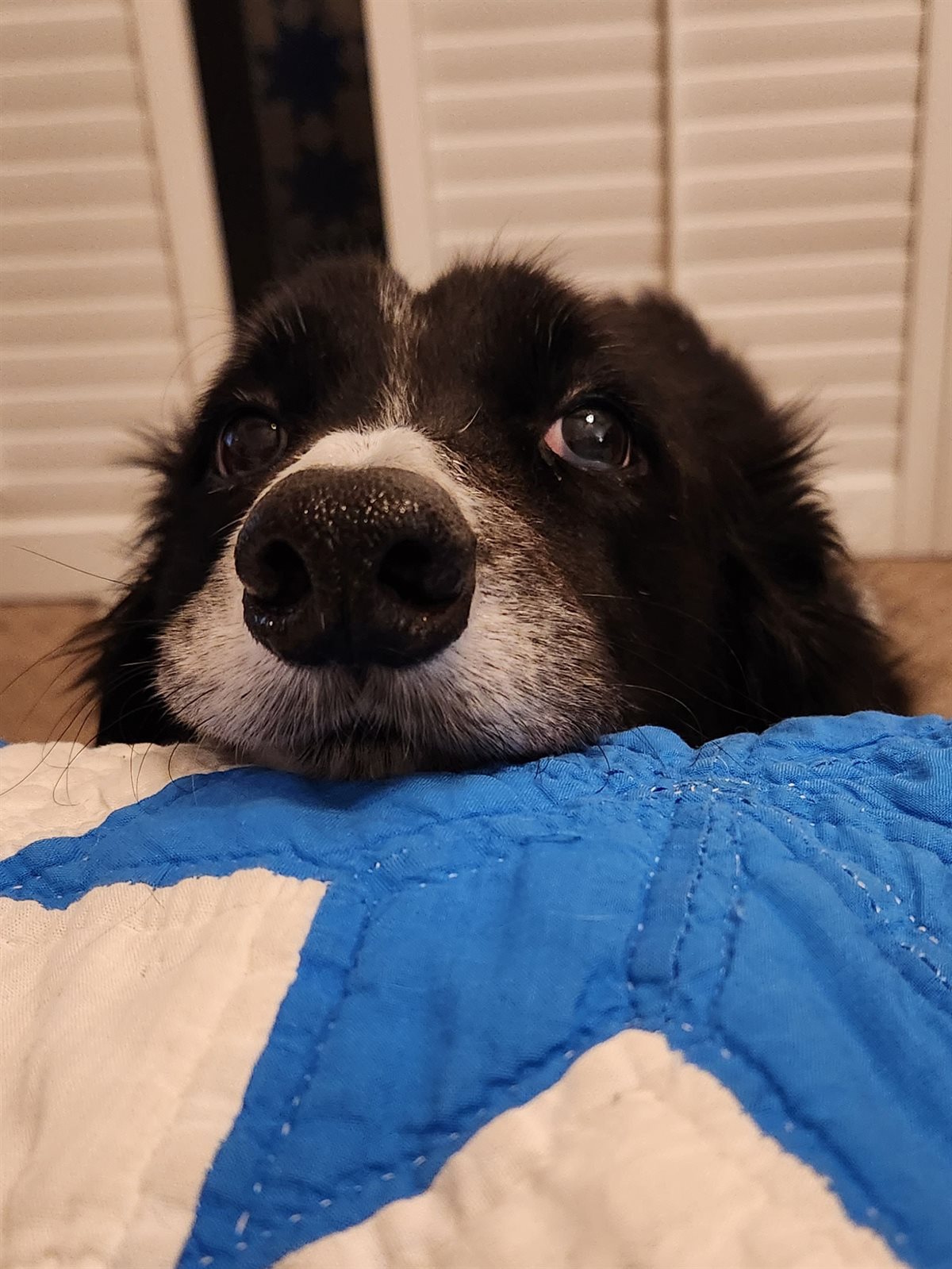
Finley, the black and white Border Collie who inspired the Canine Stroke Foundation, resting his chin on a blue and white quilt and looking up at the camera.

Finley, and Why the Canine Stroke Foundation Exists

Finley survived three strokes and a close call. Through it all, Jordan searched for clear answers and couldn't find them in one place. The Canine Stroke Foundation exists so other families don't have to search alone.

What Came First

Three Strokes and One Close Call

This is what I noticed before each one.

  • Episode 1 · August 2025
  • Episode 2 · October 2025
  • Episode 3 · January 2026
  • Close call · Last weekend of April 2026
The Goggles

Why Finley Wore Goggles

Finley would push his face into bushes and scratch his eyes without knowing the branches were there. The goggles acted like a shield.

How He Was Really Doing

A Wobbly Walk Is Not a Quality of Life Score

Finley was happier after his strokes than he had ever been.

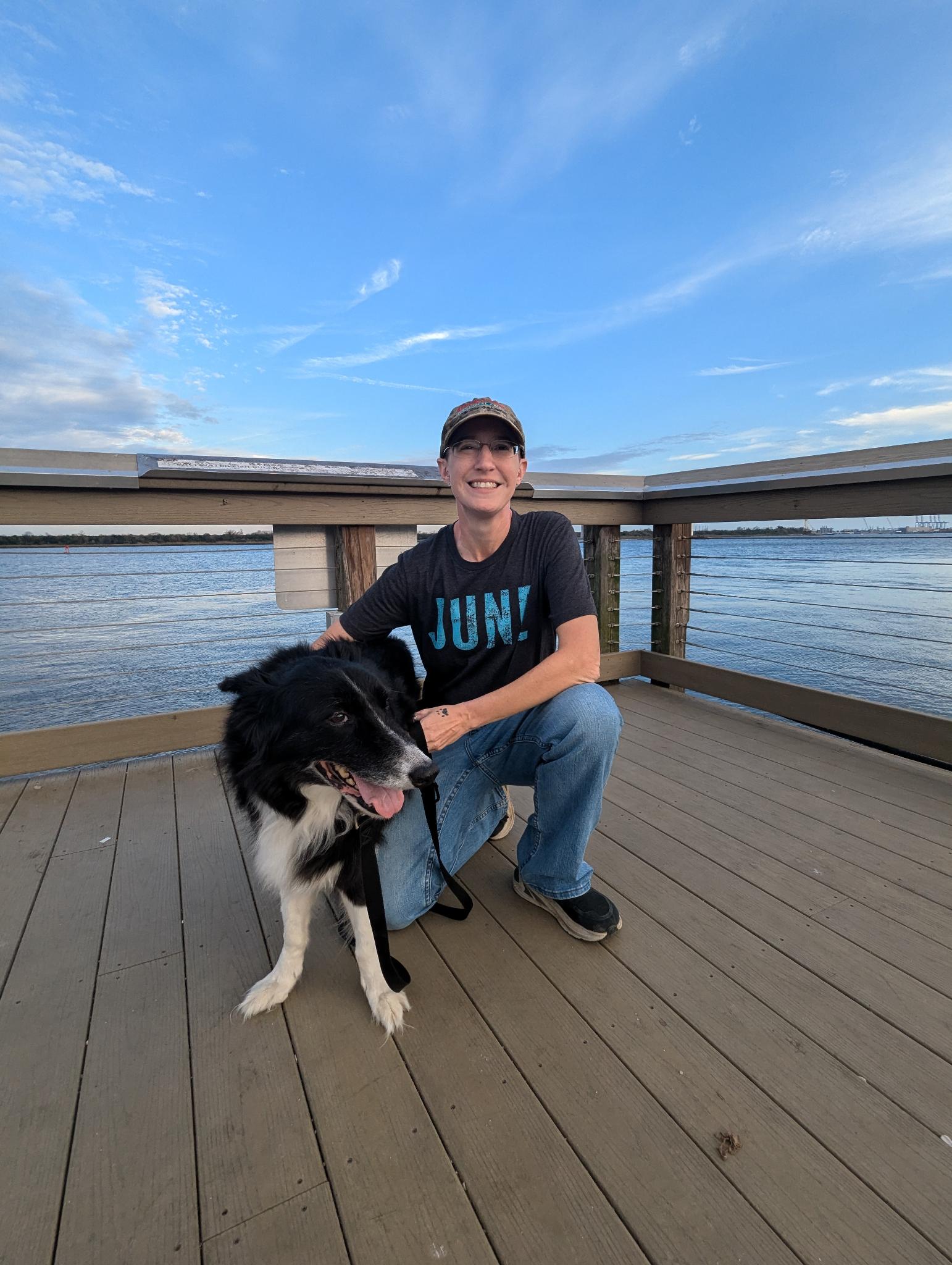
Jordan Davis kneeling beside Finley, a black and white Border Collie, on a wooden pier over the water under a blue sky.

Meet the Founder: Jordan Davis

Jordan Davis is a former veterinary technician and zookeeper, now studying veterinary science at the University of Illinois. Jordan founded the Canine Stroke Foundation in April 2026, after caring for Finley through three strokes.

Remembering Finley

February 2, 2012 to October 26, 2026

Finley passed peacefully at home on October 26, 2026.

I am so grateful for everyone on Finley's medical team who has been on this journey with us, and for the friends in vet med I reached out to along the way. Thank you to everyone who reached out to me before and after his death, and to everyone who has followed his story.
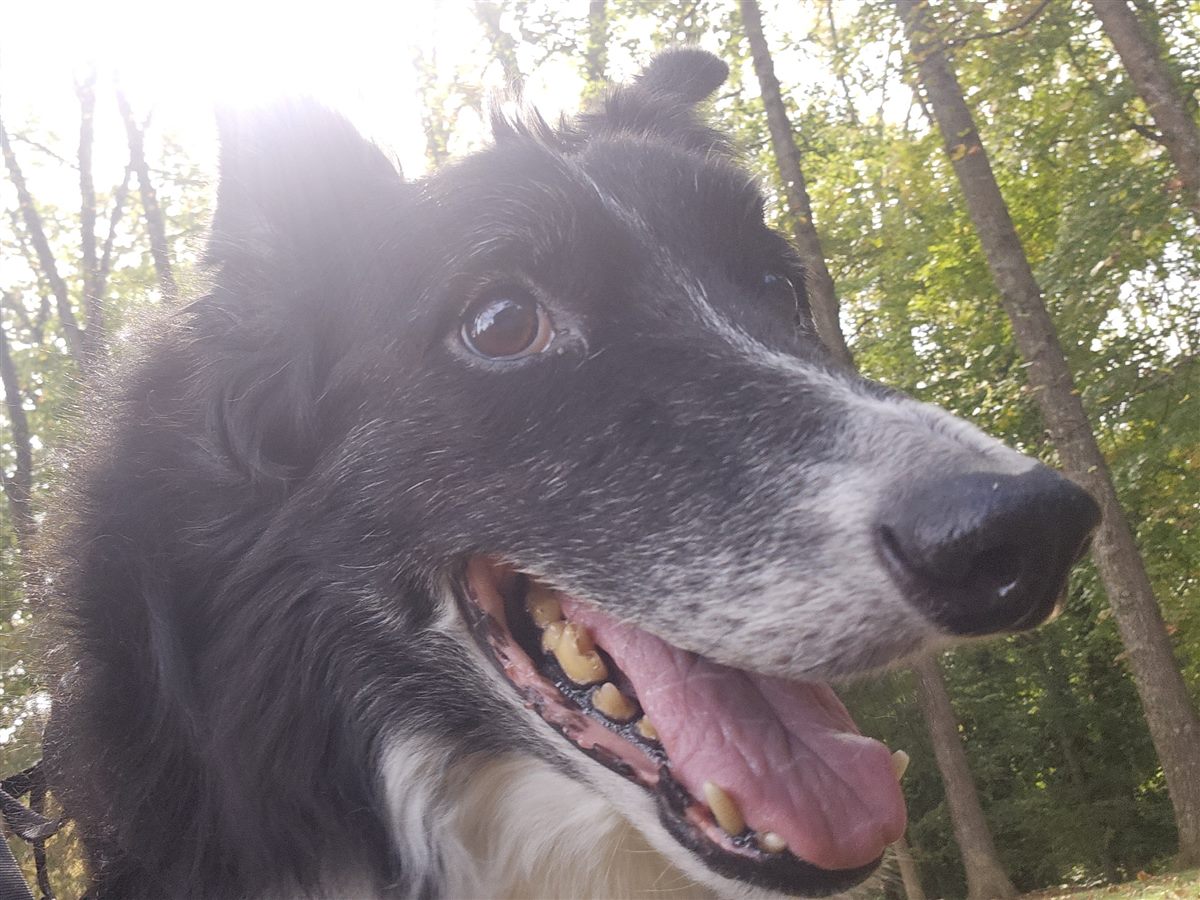
Finley, a black and white Border Collie with a gray muzzle, smiling with his mouth open under tall trees on a sunny day.

Finley, and Why the Canine Stroke Foundation Exists

Finley, the black and white Border Collie who inspired the Canine Stroke Foundation, resting his chin on a blue and white quilt and looking up at the camera.

Finley, the heart of this Foundation.

Finley was a Border Collie, born February 2, 2012. He was 13 when the first stroke hit in August 2025. In all, he had three strokes, one close call I caught in time, and several transient ischemic attacks (TIAs, also called mini-strokes). Two of those strokes and the close call started the same way, with a hesitant walk that looked like he couldn't see well. Nothing about his recovery was ever certain.

Hypothyroidism was what put him at risk. An underactive thyroid can lead to atherosclerosis, which is the narrowing and hardening of arteries, and it has been found in some dogs who have had ischemic strokes. High blood pressure is also common in these dogs. Finley also had a nodule on one of his adrenal glands. Adrenal nodules can produce excess hormones like cortisol or adrenaline, and either one can drive blood pressure up, so it was part of what we watched alongside his thyroid.1–4 Finley had high blood pressure. Keeping it controlled was part of how we tried to prevent the next one.

Finley wasn't formally diagnosed until after his third event, in January 2026. That's when his neurologist said they suspected repeated cerebrovascular events, meaning strokes. That diagnosis was based on his symptoms. We never got an MRI. It runs $4,000 to $6,000, and I couldn't afford it.

I spent many years as a veterinary technician, and I still couldn't find what we needed. I didn't have clear answers either. I looked up the research and the websites myself, one at a time, trying to work out what was happening to him and why. What was out there was scattered, inconsistent from one source to the next, and rarely written in a way a pet parent can actually use in the middle of a crisis.

If that was true for me, it was true for every family facing this without a clinical background. That's why caninestroke.org exists: to put it in one place. That gap, the isolation, and costs like the MRI we couldn't reach are what this Foundation is trying to close. Finley's story is not unusual, but it is the reason this work began, and his legacy is the reason it continues.

So this is his story in full: what I saw before each episode, the sign that kept repeating, and how he was really doing.

Remembering Finley

Finley, a black and white Border Collie with a gray muzzle, smiling with his mouth open under tall trees on a sunny day.

Finley, on his last day.

February 2, 2012 to October 26, 2026

Finley passed peacefully at home on October 26, 2026. His liver cancer kept making his brain and body worse, and when his quality of life started to slip, I chose to put his comfort first. Thanks to his vet coming to our house, he was able to pass on his own bed with his head in my lap, listening to Tyler Childers' "All Your'n."

Before that day, I had a session with Keao Love (opens in new tab), an animal communicator. She knew things about Finley that she couldn't possibly have known, and she helped me find peace with my decision. If you're facing the same choice, talking with a legitimate animal communicator before you lose your pet may bring you some peace too.

Courtney Wennerstrom, host of The Hardest Goodbye (opens in new tab) podcast, introduced me to the term anticipatory grief. It gave a name to what I had been feeling while Finley was still with me. She is now helping me through my grief after losing him.

Finley spent most of his life as a fearful dog. His strokes took that fear away, and what was left was the happiest version of him I ever knew. He loved playing with cats. He herded other dogs, especially while they were trying to play fetch. And he bit trees, just in case one would drop a squirrel for him. He was my running partner, and my buddy on every adventure and road trip. On one of those adventures, he helped me find the coolest shark tooth fossil I've found so far.

He was so strong and so resilient. He came back from three strokes, a close call, and more setbacks than I can count, and every time he was stubbornly determined to stay happy. He was loved completely, and he always will be. His shark tooth, his paw print, and his name are tattooed on my arm.

Even though he's gone, Finley is still helping other dogs. I took him to Breathitt Veterinary Center at Murray State University, which is working to open Kentucky's first veterinary school, for a necropsy so we could learn everything his body could teach us. The necropsy found something we never knew was there: a mass at the base of his heart, which may have added to his decline. We also sent samples to a research lab in California that is working on a blood test to find liver cancer in dogs. His legacy lives on through this Foundation and through research that may help the dogs who come after him.

I am so grateful for everyone on Finley's medical team who has been on this journey with us, and for the friends in vet med I reached out to along the way. Thank you to everyone who reached out to me before and after his death, and to everyone who has followed his story.
Three Strokes and One Close Call

This is what I noticed before each one. I'm recording it in this much detail because it's the record I wanted and couldn't find.

  • Episode 1 · August 2025

    The First One

    He skipped dinner the night before. The next morning his eyes were darting side to side and he could not stand. With assistance, he was walking in circles. A head tilt to one side followed.

  • Episode 2 · October 2025

    Four Legs, Then Four Days of TIAs

    It started with him being hesitant to walk, as if he could not see well. Then his eyes started darting side to side, and he lost control of all four legs. A head tilt to the side developed later. A few days later, he had four days of episodes that looked like seizures. Those were his TIAs, and when they started, his symptoms switched sides.

  • Episode 3 · January 2026

    One Eye, One Side

    The same hesitant walk came first, as if he were having trouble seeing. Then his right eye started darting up and down while his left eye stayed still and lost vision, and his left limbs stopped working. He already had a head tilt, but it became worse. He got some of that vision back within a couple of weeks, but never all of it.

  • Close call · Last weekend of April 2026

    Caught It in Time

    He was hesitant to walk, acting very strange and confused, and refusing to potty even though he was outside and overdue. I recognized it early enough to step in. No stroke followed.

The Sign I Would Never Skip Past Again

Every episode after the first one started the exact same way: a hesitancy to walk that seemed like he was having trouble seeing, before anything else showed up. Two strokes and the close call. Three of the four events above.

It was easy to miss and easy to explain away. It was the earliest thing I had to go on, and it became the one I watched for, because in the close call I recognized the signs early enough to step in, and no stroke happened.

Why Finley Wore Goggles

Stroke can leave dogs with vision loss, ranging from partial impairment to total blindness. That means they don't always see what's right in front of them, and it can lead to real eye injuries. Finley would push his face into bushes and scratch his eyes without knowing the branches were there. The goggles acted like a shield. They protected his eyes as he moved through the world during recovery.

Vision runs through his whole timeline. Every episode after the first opened with a hesitant walk that looked like he could not see well. In January his left eye lost vision outright. He got some of it back within a couple of weeks, though never all of it. The goggles were there because of what the strokes took.

A Wobbly Walk Is Not a Quality of Life Score

People often asked me how Finley was really doing. "Is he in pain?" "Are you sure his quality of life is okay?" I heard some version of these questions all the time, usually from someone who had just watched him walk.

His strokes left him with a cerebellar gait: swaying, wobbly, sometimes stumbling. To a lot of people, he looked like he was dealing with bad arthritis pain. It was understandable that it looked terrible if you didn't know what was causing it.

That's part of why I leaned on real standards for measuring quality of life, not just how a walk looks from the outside. Structured quality of life assessments look at the whole dog:

  • Physical comfort and mobility: is he in pain, and can he get where he wants to go?
  • Appetite and sleep: is he eating well and resting normally?
  • Social connection: is he seeking affection and staying engaged with us?
  • Emotional state: is he calm and curious, or stressed and withdrawn?

Something I Don't Say Often Enough

Finley was happier after his strokes than he had ever been. His strokes took away the fear and anxiety he used to carry every day. The dog in front of me was calmer, more content, and more himself than he had been before any of this happened.

Whether he was eating well, staying engaged, wanting affection, sleeping normally, and feeling calm instead of afraid: those were the things that actually told me how he was doing. His recovery included physical therapy, acupuncture, electroacupuncture, PEMF therapy (opens in new tab), and Erchonia laser therapy (opens in new tab), which he responded especially well to. He took medication for pain, blood pressure, platelets, and thyroid, plus liver support for liver cancer. He also had low-dose subcutaneous ketamine therapy for pain, which he responded well to, but we stopped it once he was diagnosed with liver cancer. Finley got lots of love, and he still demanded belly rubs before he'd leave his bed.

Meet the Founder: Jordan Davis

Jordan Davis kneeling beside Finley, a black and white Border Collie, on a wooden pier over the water under a blue sky.

My veterinary training was on the job rather than in a classroom, and that distinction has mattered more than I expected.

My training truly began at All Pets Veterinary Center in Louisville, Kentucky, under Dr. Missy Jewell, MS, DVM. Over the years that followed, I worked across multiple clinics in different cities, adapting to new teams, new practice cultures, and a wide range of patients. That breadth gave me something a single long-tenure position rarely does: a clear, comparative picture of where veterinary care succeeds and where it falls short.

Before clinical practice, I worked as a zookeeper in the United States, caring primarily for kangaroos and other Australian wildlife. It taught me to observe carefully, act with limited information, and hold a high standard of care for animals that couldn't tell me what was wrong.

In 2019, I transitioned out of clinical practice and into full-time professional pet sitting. Running my own business has meant being solely accountable to my clients and their animals, with no institution to defer to and no safety net.

My degree is a Bachelor of Interdisciplinary Studies from Western Kentucky University, built around a strong focus in biology and chemistry. I'm currently enrolled in a graduate certificate program in Veterinary Science through the University of Illinois College of Veterinary Medicine, and I plan to continue into the master's program.

At the end of April 2026, I founded the Canine Stroke Foundation, a nonprofit working toward 501(c)(3) status, focused on canine and feline stroke awareness, pet parent education, and financial assistance for families facing treatment costs. The Finley Initiative and the Feline Stroke Initiative operate as its dedicated education programs. The organization also seeks to advance canine and feline stroke research in a space that has historically received very little of it.

I'm building it the way I would have wanted it handed to me. The dogs who come after Finley should have an easier time of it than he did.

How We Operate

Standards, Not Aspirations

These are not values we are working toward. They are commitments already embedded in how this organization is structured and governed.

01 Evidence-Based Only

All resources reflect current veterinary knowledge. We do not publish speculation, trends, or claims not supported by accepted practice. As medicine evolves, so do we.

02 Financial Transparency

Every dollar is treated as entrusted, not owned. Funds are distributed based on medical need and financial hardship, not social reach or personal connection.

03 No Manipulation

We do not raise funds through distortion, fear, or exaggerated claims. We share real stories accurately because trust is the only currency that lasts.

04 Conflict of Interest Disclosure

Required by bylaws. No director, officer, or advisor may benefit personally from funds. Conflicts are disclosed, and anyone with a conflict steps aside, without exception.