
The Feline Stroke Initiative

Resources for Cat Lovers

An education and outreach program focused on stroke and embolism (blood clots) in cats. It operates under the same mission and standards as The Finley Initiative. Well-researched resources for families dealing with these conditions.
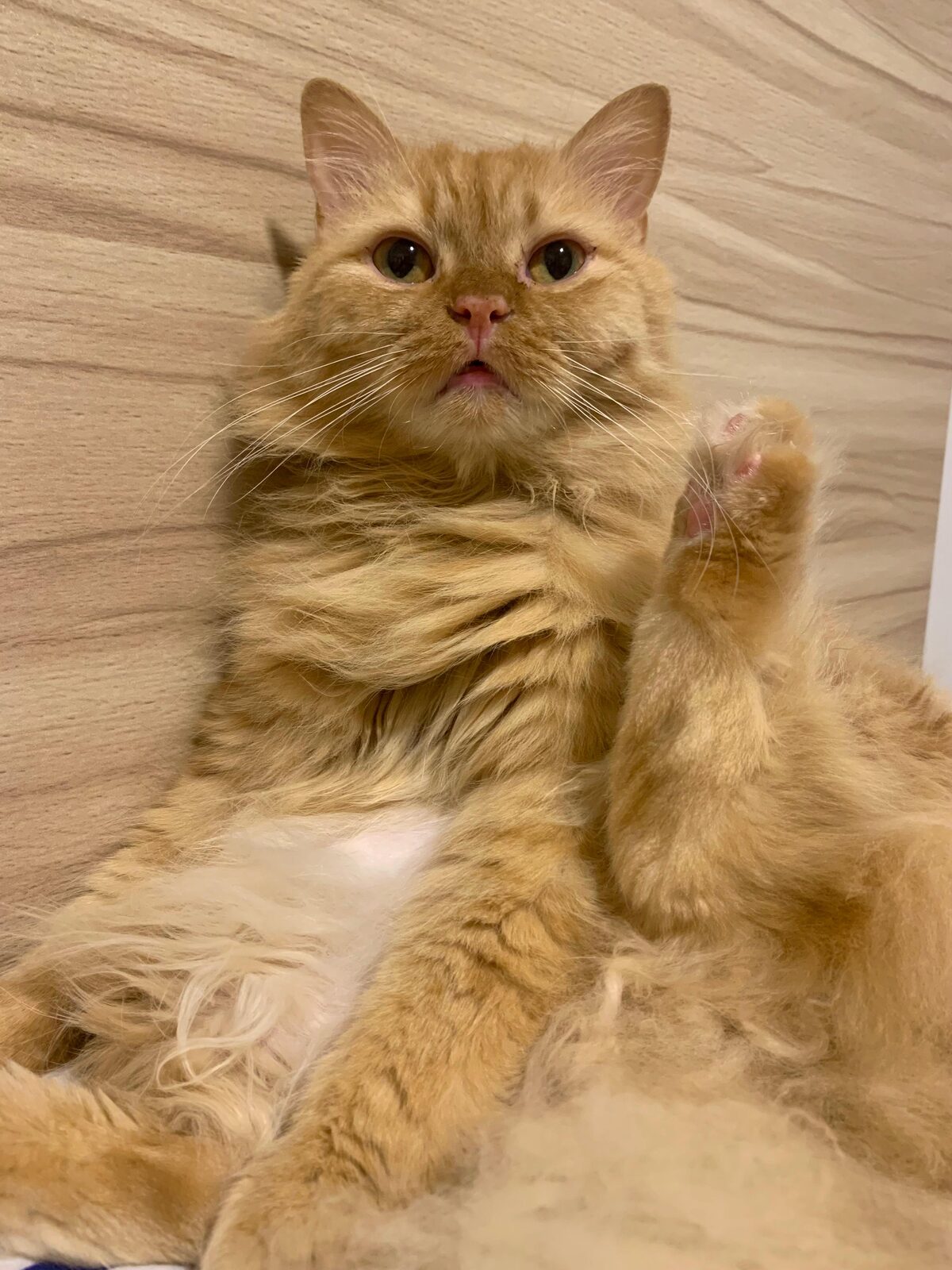
Batata, also known as Sweet Potato, the cat behind the Feline Stroke Initiative.

If you think your cat is having a stroke or a blood clot, get to a veterinarian now. Sudden weakness or paralysis in one or more legs, crying out in pain, difficulty breathing, a head tilt, or collapse are all emergencies. Do not wait to see if it passes. Call your regular veterinarian or the nearest emergency clinic.

Recognizing the Signs

Catching It Early Saves Lives

The cats who have strokes aren't a random group. They tend to share a pattern. Knowing that pattern is the fastest way to catch a problem before it turns into a crisis.

Call Your Vet the Same Day if You See Any of These1–6

  • A sudden head tilt
  • Walking in circles
  • Loss of balance, or a wobbly, clumsy walk
  • Inability to stand or walk
  • Weakness or paralysis, often on just one side
  • Odd eye movements, or sudden loss of vision
  • A seizure
  • Acting confused, or being very sleepy and hard to wake
  • Signs that come on suddenly, not slowly over weeks

That last point matters most. Sudden is the word to watch for. A problem that builds slowly over months is usually something else. One sign carries extra weight: how awake and aware a cat is. That tells a vet more about how serious a brain injury is than almost anything else, so vets grade it on a set scale, the modified Glasgow Coma Scale, instead of guessing.

Blood Clots Are a Different Emergency, With Their Own Signs1–2

A clot that breaks loose and lodges in an artery is called arterial thromboembolism. It comes on within minutes, and it is one of the most painful things that can happen to a cat. Most often it blocks the artery to both back legs, but a front leg can be affected too. Call an emergency vet right away if you see:

  • Sudden dragging, weakness, or no use at all of one or more legs, most often the back legs
  • Crying out or obvious pain, especially around the affected leg or legs
  • Legs or paws that feel cool or cold to the touch
  • Pale or bluish paw pads and nail beds
  • No pulse you or your vet can feel in the affected legs
  • Fast or hard breathing, even in a cat who is not in heart failure
  • A cat who feels cold all over. A low body temperature is linked to worse outcomes.

Together these add up to a picture vets recognize: no pulses, pale tissue, legs that will not work, and cold limbs in a cat that is clearly in pain.

If your cat shows any of these signs, don't wait it out. Get to a vet.

Which Cats Are Most at Risk1–7

  • Senior cats. Risk adds up with age, mostly because the illnesses below are common in older cats.
  • High blood pressure. This is one of the strongest causes, especially in cats with kidney disease that is not being treated well or has not been found yet. Blood pressure that stays high wears down the small blood vessels in the brain. Some of those vessels get too narrow, and the tissue behind them starves. Your vet may call that an ischemic stroke. Others get weak and burst, which is a hemorrhagic stroke. In cats with high blood pressure, an estimated 29 to 46% show signs that their brain is affected.
  • An overactive thyroid. This often causes the high blood pressure. And treating the thyroid does not reliably fix the blood pressure, even with radioiodine treatment.
  • Heart disease, especially the thickened-heart kind called HCM. When the upper left chamber of the heart gets stretched, blood slows and pools there, and that is where clots form. A stretched left atrium is one of the main warning signs vets use to judge a cat’s clot risk. Blood in these cats also tends to clot more easily than normal, often well before any clot forms.
  • Diabetes, and blood that is too thick, either from too many red cells (polycythemia) or too much protein in the blood (paraproteinemia). Both of these make a clot more likely.
  • Rat or mouse poison (anticoagulant rodenticide). These poisons block the body's ability to use vitamin K, and a cat's existing clotting factors run out within a few days of eating a toxic dose. A cat doesn't have to eat the bait itself to be at risk: eating a rodent that has already been poisoned can cause the same toxicity. Bleeding usually shows up 3 to 7 days later, and depending on where it happens, signs can include seizures or a wobbly, uncoordinated walk (ataxia), not just the more obvious bruising or bleeding.

What Catching It Early Actually Looks Like1–6

  1. Blood pressure. Have it checked regularly once your cat is a senior, and more often if your cat has kidney disease, an overactive thyroid, or diabetes. Vets grade it on a standard scale from the American College of Veterinary Internal Medicine: under 140 mmHg is normal, 140 to 159 is borderline, 160 to 179 is high, and 180 or above is severe.
  2. Bloodwork. A senior panel that checks thyroid and kidney values, since both conditions drive the blood pressure problem above.
  3. The heart. Ask your vet to listen for a murmur or an uneven rhythm, and whether your cat should have a heart scan. Heart disease is a leading reason cats throw clots, and it is often silent until one does.
  4. If bleeding in the brain is possible, ask for a liver panel too, not just the usual platelet count and clotting tests, like aPTT.
  5. Ask for a specialist referral. A veterinary neurologist if a stroke is suspected, or a veterinary cardiologist if a clot is suspected. In cats, clots almost always come from a heart that was already diseased. In a study of 127 cats with a clot, nearly all had an enlarged left atrium, and most had a cardiomyopathy. Finding and treating that heart problem is what lowers the odds of another one.
  6. Push for a scan when signs come on suddenly. An MRI is still the only reliable way to tell a stroke apart from a tumor, brain inflammation, or another cause.

This is the work the Feline Stroke Initiative exists to support: helping families and vets catch these cats before a crisis, not just treat them after one.

A Stroke Is Not the Only Thing That Looks Like a Stroke1–3

A sudden head tilt, wobbly walk, and eyes flicking side to side don't always mean a stroke. In one MRI study of 77 cats with those signs, 52% had a problem in the brain itself, including a few strokes, while 48% had a problem in the inner ear or the nerve connecting it to the brain instead. Close to half of the inner-ear cases had no cause ever found, a condition called idiopathic vestibular syndrome, and most of those cats made a fast, full recovery on their own.

A brain tumor can look exactly like a stroke too. The most common brain tumor that starts in a cat's brain is called a meningioma. Cats with a brain tumor are usually older, around 11 years old, which is the same age range where strokes happen. These tumors normally grow slowly. But if one bleeds, or if the tissue around it swells, a cat who seemed fine a few days ago can go downhill fast.

On the day it happens, any of these can look identical to a stroke. That is why a scan matters. You cannot tell them apart just by watching your cat.

Understanding Stroke & Embolism

What Happens During a Stroke and During a Blood Clot

A stroke and a blood clot are two versions of the same problem: blood is not reaching a part of the body that needs it. Where it happens is what changes the signs. In the brain, that is a stroke. When a clot travels to a leg or, more rarely, the lungs, that is an embolism instead.

Stroke.1–3 When blood flow to part of a cat's brain is cut off, or a vessel there bleeds, that is a stroke. There are two kinds.

Ischemic Stroke

A blood clot blocks a blood vessel that feeds the brain, cutting off oxygen to that part of the brain. How common this type is in cats is not fully settled. A review of 16 cats with confirmed cerebrovascular disease found a mix, with slightly more hemorrhagic cases than ischemic. A more recent study using MRI in 9 cats with a suspected stroke found the ischemic type in all nine. Larger studies are needed to know which is truly more common in cats.

Hemorrhagic Stroke

A blood vessel in or around the brain breaks open and bleeds. In the same 16-cat review, this type, either bleeding into the brain tissue or within the skull, was seen slightly more often than the ischemic type.

Embolism.4–6 An embolism is a blood clot, or a piece of one, that breaks loose, travels through the bloodstream, and lodges somewhere else, blocking blood flow. In cats, this happens almost entirely because of underlying heart disease.

Aortic Thromboembolism (Most Common)

Heart disease slows blood flow through the heart's left atrium and lets it pool there. That pooled blood activates platelets and forms a clot. If a piece breaks loose, it typically lodges where the aorta splits toward the back legs, a pattern vets call a “saddle thrombus.” This blocks blood flow to one or both back legs, and sometimes a front leg. Because the clot's location is often obvious on a physical exam, a diagnosis can frequently be made without imaging.

Pulmonary Thromboembolism (Rare)

A clot can also travel to the lungs and block blood flow there, making it hard to breathe. Pulmonary clots are far better documented in dogs; there is not enough cat-specific research to know how often they happen in cats.

Working With Your Vet

Make the Most of Every Appointment

A full workup helps your vet find the cause and catch problems early. At your appointment, ask about:

Make the Most of Every Appointment1–6

  • Bloodwork and a urinalysis. A senior panel that checks kidney and thyroid values, since both conditions are closely linked to the high blood pressure behind feline strokes.
  • Blood pressure. A measurement taken at the visit, graded on a standard scale: under 140 mmHg is normal, 140 to 159 is borderline, 160 to 179 is high, and 180 or above is severe.
  • A referral to a specialist. Ask for a veterinary neurologist if a stroke is suspected, or a veterinary cardiologist if a clot is suspected, since heart disease is behind nearly every case of arterial thromboembolism in cats.
  • An echocardiogram. A heart ultrasound checks for hypertrophic cardiomyopathy (HCM), where the heart muscle thickens, or restrictive cardiomyopathy (RCM), where it stiffens. Both raise a cat's risk of a blood clot, and the scan also shows whether the left atrium is enlarged, one of the strongest warning signs vets use to judge that risk.
  • An abdominal ultrasound. Can show a clot directly if it's sitting at the aortic trifurcation, the “saddle thrombus” pattern, and helps confirm the diagnosis when it isn't already obvious from a physical exam. It also checks the liver and kidneys, since kidney values already factor into the blood-pressure workup above.
  • Imaging, if a stroke is suspected. MRI is used to diagnose a stroke in cats much like it is in dogs, and shows the same patterns of injury in the same brain regions. If a clot in a leg is suspected instead, the diagnosis can often be made by physical exam alone, since cold, painful, pulseless limbs are a recognizable pattern, so imaging is not always needed before starting treatment.

Keep a symptom log. Write down everything you see and when it started. Note whether it's getting better or worse. This timeline is one of the most helpful things you can bring to the appointment.

What to Expect Over Time1–3

The most complete outcome numbers come from blood clots (ATE), since that's studied more than feline stroke itself. Here is what the largest studies found.

  • A blood clot is often fatal right away. In one study of 250 cats treated in general veterinary practice, 61% were euthanized at the time of diagnosis, before treatment had a chance to work.
  • Cats who make it past the first day have a real shot. Of the cats who survived more than 24 hours, 44% were still alive a week later, and cats who reached that one-week mark lived a median of 94 days after their clot. Six of them were still alive a full year later.
  • A separate hospital study found similar odds. Of 127 cats treated for a clot at a referral hospital, 87 received treatment, and 45% of those survived to be discharged, going on to live a median of 117 days after their clot.
  • A second clot can happen. About 1 in 4 of the cats who survived one clot went on to have another.
  • Heart failure and a cold body both point to a harder road. Cats without congestive heart failure lived nearly three times longer than cats with it (223 days versus 77 days), and a cat's body temperature at the time of treatment helped predict survival: cats at about 99°F (37.2°C) had roughly even odds of pulling through.
  • Feline stroke has far less data. The largest MRI-confirmed study followed only 9 cats, and found a favorable short-term outlook: 8 of the 9 were still alive 48 hours after coming in. There is not yet a long-term outcome study for feline stroke the way there is for blood clots.
Home Care & Recovery

Supporting Recovery at Home1–2

Small changes to your home and routine can make a big difference while your cat regains strength and confidence. Consider:

  • A physical rehabilitation referral. Ask your vet about a referral to a certified veterinary rehabilitation specialist. In a study of cats with severe spinal cord injury causing hind-leg paralysis, none of the cats whose owners declined physical rehabilitation regained the ability to walk, while a meaningful share of the cats who received an intensive clinic-based rehabilitation program did. That study looked at spinal cord injury rather than stroke or a clot specifically, so this is a reason to ask, not a promise.
  • Pain relief, especially after a clot. A blocked leg is one of the most painful things that can happen to a cat, and severe pain is treated as the top priority from the moment your cat reaches the vet. Once home, ask about an ongoing pain-control plan for the affected leg, especially in the first days of recovery.
  • An acupuncture referral. Ask your vet about a referral to a certified veterinary acupuncturist. A practitioner can advise whether acupuncture is a good fit for your cat's recovery alongside standard veterinary care.
  • A comfortable, quiet resting place away from foot traffic, where your cat can rest and recover undisturbed.
  • Traction on main walkways. Yoga mats or rugs on hard floors give paws better grip and reduce slipping for a cat relearning to walk.
  • Easy litter box access. A low-sided box placed close to where your cat rests removes one of the hardest early obstacles for a cat with leg or balance problems.
  • A consistent daily routine. Regular feeding, litter box cleaning, and rest times help a confused or weak cat feel safe.
A Note on Grief

If Things Don't Go the Way You Hoped

Grief does not only come after a loss. Watching your cat struggle, or worrying about what comes next, can bring on grief of its own. That is called anticipatory grief, and it is just as real as grief after a loss. A counselor who understands pet loss can help with either.

Have a Question?

Is There a Topic We Should Cover?

This page is just getting started. If there's something you wish you'd known about feline stroke or embolism, let us know and we'll work on covering it.

General inquiries

info@caninestroke.org
On the Way

Coming Soon

We're building out cat-specific resources alongside our page on stroke in dogs, which is also still filling in. Here's what's coming:

Emergency Stroke & Embolism Guide Informational Handouts Rehab Locator Emergency Vet Locator Plain-Language Research Glossary Recovery & Rehab Guides Equipment & Product Guides Educational Webinars FAQ